
A deteriorating wastewater liftstation is located in a township. The pumps are nearing the limit of their lifespan, the controls are outdated and the access hatch is degraded. The concrete wet well is sturdy and solid.
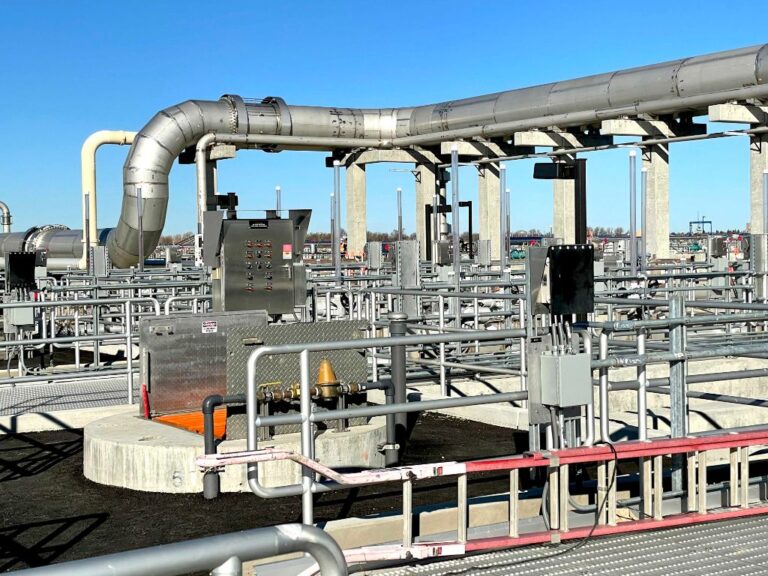
Image credit: romtecutilities.com
Should the entire station be demolished and rebuilt? Not necessarily. The more useful question is whether the existing infrastructure is able to support a modern pumping system with no compromise in the reliability, accessibility to maintenance, or future capacity.
Retrofitting an existing pump station can be a great way to protect infrastructure, and also replace parts which are no longer in use.
Begin With the Structure No One wants to replace.
Wet wells are typically the most costly and disruptive component to replace, as they are buried and connected to existing pipes and are crucial to the process of removing wastewater.
Retaining a concrete construction that is functional can minimize the digging and construction.
However, damage to the access hatch could affect the decision. Romtec Utilities identifies wet well hatch replacement as a standard retrofit requirement. It may be more durable to replace the top layer instead of constructing a new hatch on deteriorated concrete. This option can be utilized to improve access and the usability of the structure without needing to rebuild the entire wet well.
A More Powerful Pump Changes the Engineering
Imagine that the area of residence has exploded in size since the original lift station installation. It could be that the existing pumps are no longer adequate to handle the increase in wastewater flow.
The upgrade of a pumping device could include higher-horsepower equipment, but this isn’t possible without considering the surrounding system. To make the pumps more powerful it is possible make adjustments to the discharge elbows or pipe. You might also have to alter electrical controls and valves.
Engineers must also evaluate the system’s hydraulic requirements, including the flow and head total dynamic. The installation of a bigger pump prior to assessing the requirements could cause more problems than it resolves. Making plans for future expansions during the initial design phase will make it much easier to grow later.
Make sure the wastewater is moving during Construction
A wastewater pump station retrofit introduces a challenge that ordinary equipment replacement projects may not face: the station may need to remain operational throughout construction.
Even if contractors are busy and preparing for the next project, wastewater is still arriving. According to the type of project the temporary bypass pumping might be necessary to ensure the service until existing equipment is removed, and new components are put in place.
Romtec Utilities took on this challenge in the Federal Law Enforcement Training Center, Brunswick, Georgia.
The project involved the replacement of two older wastewater lifting stations, and operating the facility. Specific engineering for the site and packaged replacement systems and bypass pumping methods helped make room for the existing station footprints as well as operational demands. The example illustrates the importance of focusing on construction sequencing prior to installation.
If you decide to replace, it is the best Alternative
Some stations are not suitable to be renovated. A seriously degraded wet well insufficient structural capacity or major changes in hydraulic requirements might make a the replacement of a sewer lift station better than making changes to the existing installation.
In making a decision, it is important to consider the structural integrity of the structure, its compatibility to equipment, access to construction sites, service continuity as well as long-term requirements. Romtec Utilities starts retrofitting and replacing projects by identifying components that are to be kept and those that will need to be replaced.
The company will then create sites-specific engineering designs, budget estimates, and preliminaries of designs. Prefabricated components are also beneficial to facilitate installation and reduce certain on-site demands.
The Project is Not Complete When the Pumps Are In Place
Modern lift stations must operate as an integrated system. Before returning a lift station to normal service, startup tests, commissioning as well as verification of the equipment are essential to make sure that all pumps, controls and the related equipment function in accordance with their design.
The manuals as well as the training of operators are equally crucial. Maintenance personnel need to understand the latest equipment, operating procedure, and documentation before taking responsibility for the station.
Retrofitting infrastructure is a great way to preserve its value, while eliminating the limitations that prompted modernization.
For facility owners and municipalities it is important to look beyond immediate repairs. Most successful projects blend new equipment and existing structures. They provide important services during construction and then prepare the pumping systems for a lifetime of operation.