
The month has ended. The month has ended.
Then, you should check the restaurant’s bank account.
The number may not be the one you were expecting.
For restaurant owners, this disconnection can be a source of frustration because profits and cash available appear to tell the same story. They don’t. It’s not true. P&L is a measurement of financial performance, whereas the bank account is an indication of the time when money flows in and out.
Understanding the difference can alter the way that a restaurant’s owner is able to view their financials.
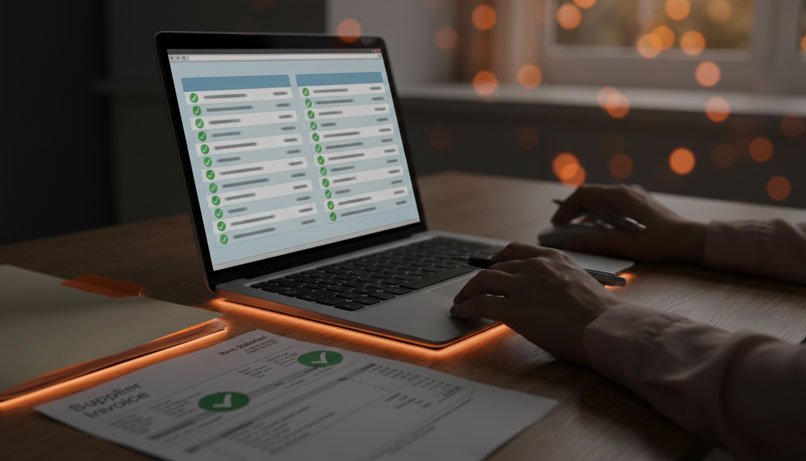
Check out what goes on in a typical week. Customers pay for meals. Employees need to be paid. Deliveries of food and beverages arrive with invoices attached. Rent is getting closer. Credit card deposits have their own specific timing. The tax on sales is an obligation.
Already, the next week’s purchases have started.
Looking only at revenue or the ending profit number does not take into account a lot of the activity.
The Key to the Mystery Could Be Hidden in Prime Cost
If restaurant profitability begins to decline, the food, beverage and labor costs must be taken into consideration.
Cost of goods sold combined with labor is the primary cost. The Bookkeeping Chefs’ advice places the cost of goods sold between 60 and 65% of revenues for many establishments. They also stress weekly monitoring instead of waiting until the end of the month.
Effective prime cost management is less about obsessing over a single percentage and more about noticing movement early.
If the restaurant is performing in line with its goals however this week’s performance increases. Perhaps the overtime rate was increased. Perhaps beverage costs remained stable however food prices soared. Operators may examine menus as well as waste, portions sizes, vendor invoices, and purchasing if the food percentage is greater.
The percentage is crucial. The restaurant’s activity is the answer.
This conversation is possible because everyone is able to recall the events that transpired.
After a period of two to three weeks, it becomes more difficult to reconstruct particulars.
When the vendor bills arrive
Restaurants might purchase food items one week and pay for them the following week. This is due to the fact that understanding profits alone does not answer all cash issues.
Vendor invoices must be received and logged. In a busy operation with multiple suppliers, managing that manually can turn into the company’s own administrative task.
Automating the account payable process will help to organize the process by reducing the repeated handling of payments and bills. Bookkeeping systems that are integrated to accounting systems can provide owners with a clear picture of obligations, even if they haven’t yet been paid.
This is advantageous, since the bank’s balance may appear healthier than a restaurant’s real near-term situation.
It might be that there are $80,000 in your account as of right now. The figure of $80,000 is little if rent, vendors or payroll make up a large portion over the coming days.
Cash flow forecasting is a common outcome.
The best question to ask is “What happens to our funds after we receive it and have fulfilled the obligations we’ve made?”
The difference can be crucial in determining if this is a comfortable week to repair equipment, make an additional purchase, or preserve cash.
You may not be rightfully entitled to all the money you thought.
The sales tax illustrates this point very well.
Restaurants get money from clients, which they deal with according to their tax obligations. If these funds are divided into operating money, the bank’s balance could create a false impression of the money there to be spent.
A consistent record helps restaurants stay in compliance with sales taxes and provide management a complete picture of their financials.
This is one reason why restaurant accounting can be more effective when financial obligations aren’t viewed as distinct islands.
Prime cost affects margin. Vendor purchases affect COGS and future payments. Payroll affects the percentage of labor and cash. Sales tax affects cash availability. P&Ls record financial performance while forecasting allows management to take a look ahead.
Connect the pieces.
Bookkeeping Chef utilizes restaurant-specific reporting and system integrations to help bring those pieces together. If you don’t want to work all night reconciling financial information, outsourcing bookkeeping services can take care of the bulk of accounting tasks without removing the owner from the financial discussion.
The final part is crucial.
The goal isn’t for owners of restaurants to stop looking at the books because someone else is handling them. Owners need to be informed that can help them know what’s going on.
When the P&L indicates that the restaurant made money, but the bank account seems to be a bit unbalanced, don’t think that one of the numbers must be incorrect.
What happened between the two?
Answering this question can tell you more about the restaurant’s location than the name.